
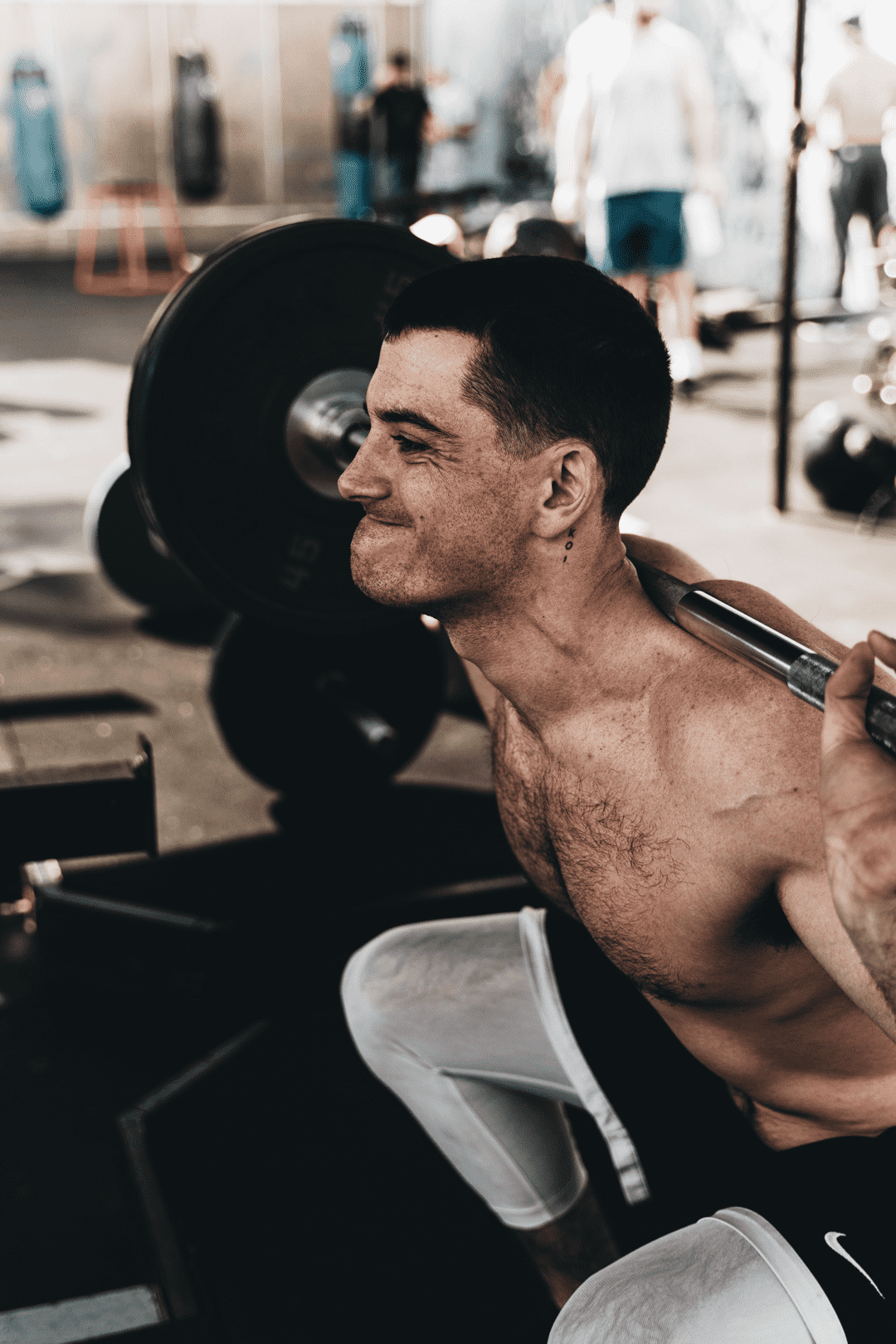
TLDR: Most evidence points to somewhere around 90 seconds to two minutes of rest between sets as a sensible default for hypertrophy training. Resting more than 60 seconds appears to offer a small advantage over very short rest periods, but there is little evidence that resting beyond about 90 seconds adds further benefit. The difference tends to matter more for compound, multi-joint lifts than for smaller isolation movements.
What the research says
A 2024 Bayesian meta-analysis by Alec Singer, Milo Wolf, and colleagues, including Brad Schoenfeld as senior author, published in Frontiers in Sports and Active Living, pooled data from nine controlled studies comparing different rest interval lengths on muscle growth. The analysis found a small benefit favoring rest periods longer than 60 seconds for both arm and thigh hypertrophy, though the effect sizes were modest, in the range of 0.13 to 0.17 on a standardized scale generally considered a small effect. Critically, the same analysis found no appreciable additional benefit from resting longer than about 90 seconds. Beyond that point, the data simply did not show further gains.
This is a meaningful departure from older guidance. The National Strength and Conditioning Association has long recommended relatively short rest periods, in the 30 to 90 second range, for hypertrophy goals, based partly on the idea that short rest periods produce a larger acute hormonal response after training. More recent research has cast doubt on whether that hormonal spike actually drives muscle growth in any meaningful way, which is part of why the guidance has been revisited.
An earlier systematic review by Jozo Grgic and colleagues in 2017 reached a similar conclusion from a different angle: both short and long rest intervals appeared to be viable for people new to resistance training, but more experienced lifters seemed to benefit somewhat more from longer rest periods.
Why rest interval matters at all
The likely mechanism is not the rest period itself, but what it protects. Shorter rest periods force a person to reduce the amount of weight lifted, or the number of repetitions completed, in each subsequent set. A 2022 study by Andre Longo and colleagues illustrated this clearly: comparing 60 seconds against 180 seconds of rest on a leg press exercise, the longer rest group averaged 16.1 repetitions across three sets, compared to 9.8 repetitions in the short rest group, and ended up with substantially greater quadriceps growth over ten weeks, 13.1 percent compared to 6.8 percent. When the researchers equalized total volume load between the two conditions by adding extra sets to the short rest group, the difference in growth disappeared. In other words, it was not the rest period that mattered directly. It was the amount of quality work that rest period allowed a lifter to sustain.
That distinction matters in practice. If someone can maintain their working weight and rep count with 60 seconds of rest, there is no strong evidence they are leaving growth on the table. The issue arises when short rest intervals force a meaningful drop in the number of hard reps performed.
The practical takeaway
For most hypertrophy-focused training, resting somewhere between 90 seconds and two to three minutes between working sets, particularly on compound lifts like squats, presses, and rows, is a reasonable default supported by the current evidence. Shorter rest periods around 60 seconds are not clearly harmful and can be useful for time-constrained sessions or smaller isolation exercises, but they carry some risk of quietly reducing the total volume load performed across a session, which is the variable that actually seems to matter. There is little support for pushing rest periods much beyond three minutes purely for hypertrophy purposes.
This ties directly into the volume question we covered in Weekly Sets Per Muscle for Hypertrophy and the broader discussion in Junk Volume: How Much Training Is Too Much. Rest interval and weekly volume are not separate variables. A rest period too short to sustain your working weight is one of the more common ways a lifter quietly turns productive sets into junk volume without realizing it.
It is also one of the easier things to lose track of mid-session, particularly on busy training days. OUTWRQ times rest periods automatically between logged sets, which makes it simpler to notice when rest is being cut short enough to be costing reps rather than saving time.
Written by the OUTWRQ team. Published August 2026.